Jesus Despised Wealth: Why Don't Christians Seem to Care?

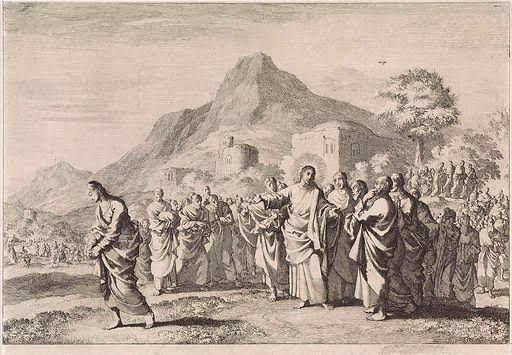
Of all the images of Jesus modern Christianity has softened, Jesus' hatred of wealth is perhaps the most profound. For example, you may have heard the story of Jesus saying, "it is easier for a camel to go through the eye of a needle than for someone who is rich to enter the kingdom of God.” This story is found in all of the synoptic gospels (Matthew, Mark, Luke) and is typical of how Jesus talks about the wealthy. You may have also heard how the "eye of the needle" was a gate in Jerusalem and how the image is meant to portray difficulty and not impossibility. Never mind that Jesus explicitly interprets his own metaphor two verses later: "For mortals it is impossible, but not for God; for God all things are possible.” This interpretation is simply something someone made up. There was no gate called the "eye of the needle" in Jerusalem. This theory was popularised in the 19th century but has no basis in history.
This metaphor comes in the context of a conversation with a "rich young man." The young man asks Jesus what he must do to be saved. Jesus responds as a typical Jewish teacher would: follow the commandments. The rich young man presses Jesus further and asks, "which ones?" Jesus responds by quoting important aspects of the law and the young man presses him even further. Jesus' response has terrified many of his followers for generations: "If you wish to be perfect, go, sell your possessions, and give the money to the poor, and you will have treasure in heaven; then come, follow me.” Not surprisingly, the rich young man walks away in grief.
Many well-meaning interpreters have attempted to interpret this whole interaction through the lens of Paul's gospel of faith. Jesus couldn't have really meant what he said, right? It sounds like Jesus is saying a person is saved by performing works of the law, something Paul explicitly rejects in his letters. But the text goes out of its way to drive home the point Jesus is making: "But many who are first will be last, and the last will be first."According to Jesus, the value of accumulating wealth stands in opposition to the values of the kingdom of God.
Jesus is under no obligation to obey our theological commitments. He is also under no obligation to agree with our political ideologies. In fact, we should be more suspicious if Jesus agrees with us entirely. However, more often than not we change Jesus to fit our belief system. For example, many Christians in the west have adopted the value of wealth and capitalism. These Christians are deeply motivated to soften this edge of Jesus. Others see in this story a kind of proto-Marxist, a revolutionary who stood on the side of the poor.
But neither of these interpretations explain Jesus' disposition towards wealth. It becomes almost silly to think the Jesus of 2000 years ago would agree with our modern economic philosophies. Rather than fitting Jesus into our systems, we must allow Jesus the prophet to have his own voice. What happens to this story when we place it in the context of Jesus' apocalyptic ministry? What if Jesus believed a new era of human history was about to begin and that accumulating wealth made no sense since God was transitioning the world into a new epoch?
Jesus taught that the kingdom of God was at hand, that he was the Messiah, and that where he went the kingdom went with him. In this new kingdom, all would be upended and the hoarding of wealth would be exposed as folly. Jesus' message about wealth is reminiscent of the words of Job: "Naked I came from my mother's womb and naked I shall return there." How foolish to hoard and be greedy and appear before God with nothing. According to Jesus, "So it is with those who store up treasures for themselves but are not rich toward God"
Jesus' message is deeply at odds with our materialistic world. It's no wonder we soften his apocalyptic edge when we encounter his radical opposition to wealth. It's difficult to understand how Jesus' imminent apocalyptic message still speaks to us 2000 years later. Nonetheless, at this stage of history which has witnessed humanity's first trillionaire, his message is certainly one we should not ignore.