Satisfied or Magnified?

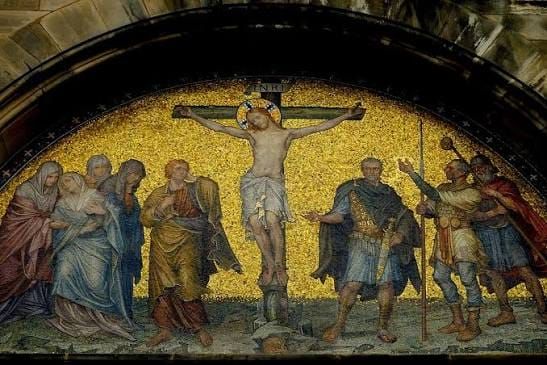
When singing the hymn,"In Christ Alone," I sometimes sing "the love of God was magnified" over the line: "the wrath of God was satisfied." It might seem petty to continue a debate that happened 15 years ago, but as someone who has spent nearly the same amount of time researching the atonement, the distinction hits close to home.
I don't deny the authors right to maintain their lyrics. I also accept, to a point, that wrath and love can be theologically compatible. If you aren't aware of the tension, however, atonement theologians debate– rather hotly at times– how to best understand just what happened when Jesus "became sin for us" and died to achieve reconciliation. Did God pour out his wrath upon Jesus to satisfy a penal requirement? Or should we think of God, through Christ, demonstrating his love? And of course - why not both?
If you think wrath has no place in God's economy, just imagine for a moment one of the many injustices happening in the world. Do you feel angry? It's hard for us to imagine God not feeling angry when considering the full weight of injustice in the world. The problem, however, is that some theologians solved this problem by having God the Judge somehow transfer injustice, sin, immorality, etc. onto Jesus, an innocent person, as a satisfaction of God's justice. The problem is obvious - this is not how justice works. Justice doesn't punish the innocent but the guilty. Sin is not some kind of abstract concept that can float from one person to another but is grounded in human action and consequence.
And furthermore, how can this possibly achieve reconciliation or forgiveness? I often use this analogy when teaching students the issue with penal forms of the atonement. Imagine for a moment you owe me $100. Now imagine the time comes for this debt to be repaid and I will not forgive you until it is. Now imagine for a moment someone else pays me that $100 and I then "forgive" you. But have I? Hasn't a transaction occurred and not genuine forgiveness? And didn't Jesus teach a pretty clear message about how forgiveness works in the kingdom of God?
My theological solution to this problem in my dissertation Doxological Atonement Theology is to conceive of wrath as a kind of diagnostic tool for the problem the atonement is trying to solve. However, when thinking of the divine solution, wrath must give way to God's divine love entirely. This problem is one of the more fascinating aspects of theology and how interpretation determines meaning in our worship.